Transforming Clearings into Canopies: ASRI’s Reforestation Efforts
The Garden to Forest program, a unique part of ASRI’s reforestation initiative in GP National Park, stands out with its four reforestation sites, two of which are solely dedicated to this innovative program. The lush rainforest, now a National Park, was once the cherished garden of the local communities, where they planted and harvested for generations. The national park's creation disrupted this historical connection, but ASRI saw an opportunity to help restore it while promoting reforestation. ASRI uses seedlings that patients give ASRI to pay for their healthcare and, in turn, plants fruit and wood trees in the forest. The Garden to Forest program aims to help local communities transform their gardens into a diverse ecosystem, preserving their historical ties to the land.
The Garden to Forest program started in 2018 in Harapan Mulia village. Before the program, the land had large clearings and a lack of diversity in the planted fruit trees. The community used this land for their gardens before the Gunung Palung (the first time you use this, don’t use an abbreviation - see above ) National Park was established. Now, clearing the land is illegal. ASRI started the Garden to Forest program to help these communities stop the unsustainable practice of clearing land for their gardens while preventing government penalties.

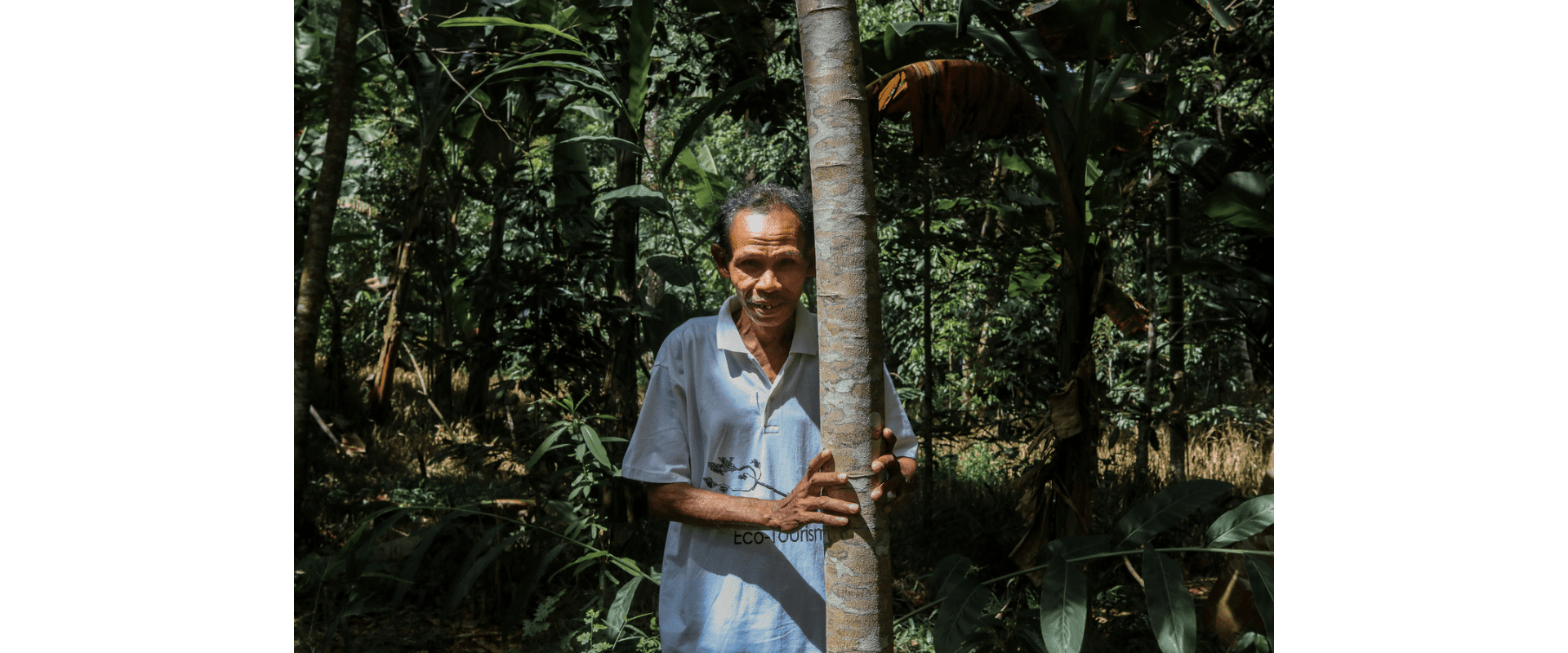
I had the pleasure of meeting Pak Sidi, a Garden to Forest participant since 2018. Pak Sidi wanted to join the program to improve his garden. Over the past six years, he has seen his garden, once primarily banana trees and cleared land, into an aspiring forest. Before he partnered with ASRI, Pak Sidi received warnings from the National Park since he was clearing land to plant banana trees within the Park. Overall, Pak Sidi is happy with the program. He has witnessed the benefits of planting long-term fruit trees. Now, his garden is transforming into a healthy ecosystem. The greatest challenge he faces is keeping away wildlife from eating the fruits. Monkeys cause him trouble, (are particularly troublesome) with only 20% of the fruit surviving. Nonetheless, Pak Sidi remains optimistic about the set-up and impacts of the Garden to Forest Program.

In the Garden to Forest sites, 60% of the trees being planted are fruit trees, and the remaining 40% are hardwood trees. The park requires that specific types of native trees be planted. Each seedling is planted 4 meters from another tree, with 625 seedlings per hectare. This planting method is less dense than ASRI’s other reforestation sites, allowing the trees to grow faster so the community members can harvest fruit within the first few years after planting. ASRI plays a crucial role in the initial planting process, but the program is designed to empower these forest communities to reforest their gardens independently, fostering shared responsibility for the forest and instilling a sense of pride in their contribution to the ecosystem.
There are now two Garden to Forest sites in Gunung Palung National Park. Harapan Mulia village and Gunung Sembilan, which was started in 2022. Getting the program started is a long process involving many stakeholders and extensive communication with the community. To choose a site, ASRI’s forestry team must first determine where clearings are in the forest. The Forest Guardian, who is part of the forest community, can suggest a potential location. Then, the team uses satellite imagery to assess how many gaps and gardens there are in the area.
ASRI and the National Park create groups of community members and approach them through the Forest Guardian to introduce the possibility of the Garden to Forest Program. ASRI then hosts a meeting with the community members to officially introduce the scheme. Here, ASRI shares the benefits of joining the program and asks the community if they are interested in participating. During the meeting, ASRI emphasized that having a garden within the National Park indicates an ecological disturbance, and there are negative consequences for the village regarding healthcare discounts. Land clearings are one indicator that ASRI uses to determine the percentage of discount a community can receive on healthcare. The Garden to Forest program can help these villages move away from unsustainable agriculture, benefiting the ecosystem and helping these villages achieve more affordable healthcare.

The Garden to Forest program is a beacon of hope for the forest community gardeners, ASRI, and the Gunung Palung National Park. It is a collaborative effort to reforest and revive the gardens around Gunung Palung National Park. ASRI's efforts are making a significant difference by helping to stop deforestation and reforest areas of the park, instilling a sense of optimism for the future. The program's positive impact on the ecosystem, coupled with the provision of more affordable healthcare, offers a brighter future for the communities involved.


